
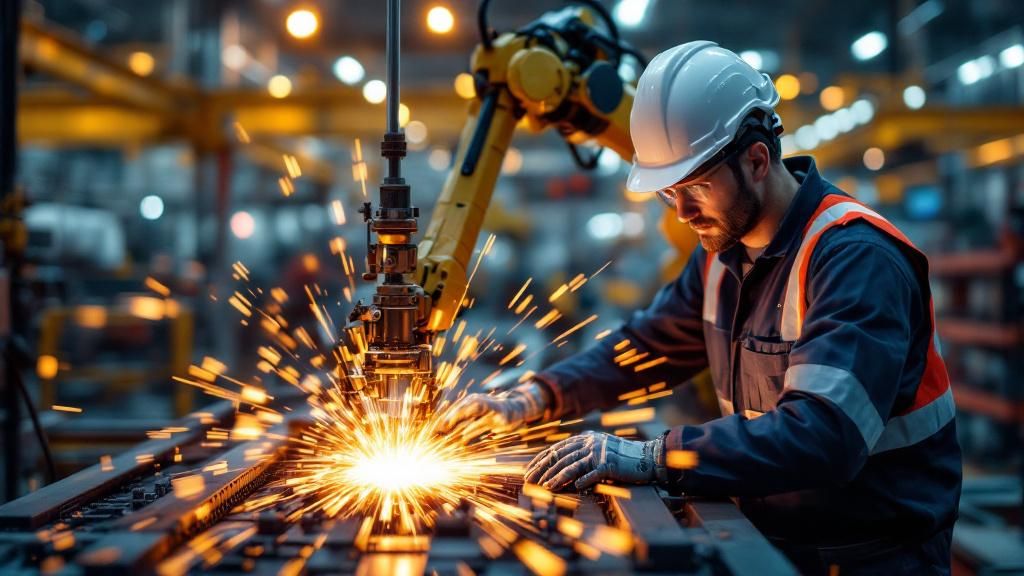
The UK manufacturing sector is undergoing an remarkable transformation as business leaders commit significant funding in next-generation automation solutions and broad-based employee development schemes. This strategic shift underscores manufacturers’ commitment to enhance productivity, remain globally competitive, and ensure sustainable growth. Our research demonstrates the substantial financial commitments driving this sector overhaul, assesses the advanced systems reshaping factory floors, and examines how manufacturers are readying their workforce for emerging challenges. Discover what this funding momentum means for the UK manufacturing sector’s future.
Investment Surge in Automation Solutions
The UK manufacturing industry has seen an substantial financial dedication towards automation solutions, with capital attaining unprecedented levels in recent years. Leading producers across the automotive, aerospace, and electronics industries are committing significant funds towards robotic systems, artificial intelligence, and advanced manufacturing solutions. This investment surge reflects manufacturer confidence in automation’s capacity to enhance operational efficiency, reduce production costs, and elevate product quality standards. The magnitude of this dedication highlights producers’ understanding that technological progress is crucial for maintaining competitive advantage in an increasingly global marketplace.
Industry experts ascribe this funding surge to multiple interconnected factors, such as post-pandemic logistics review, escalating wage expenses, and the pressing need for improved operational responsiveness. Companies are focusing on automation technologies that provide adaptability and growth capacity, facilitating rapid adaptation to fluctuating market demands. Investment data reveal that manufacturers are not merely replacing manual operations but fundamentally reimagining production methodologies. This deliberate strategy secures that British manufacturing continues at the leading edge of manufacturing advancement, positioning the sector for long-term expansion and strengthened robustness against future economic uncertainties.
Strategic Staff Development Programmes
Recognising that technological advancement alone cannot drive success, UK manufacturers are investing substantially in broad-based skills development schemes. These initiatives constitute a fundamental shift in how the industry values and nurtures human capital. By coupling automation investments with comprehensive training programmes, manufacturers are ensuring their workforce can effectively operate, maintain, and optimise new technologies. This comprehensive strategy addresses skills gaps whilst building employee confidence and engagement in an increasingly automated environment.
Skills Training Programmes
Leading manufacturers have created bespoke training academies and structured apprenticeships intended to provide workers with critical digital and technical skills. These programmes cover robotic systems operation, data analytics, cybersecurity, and complex programming frameworks. Resources allocated to tutor-delivered and web-based training systems provides accessibility across all employee tiers. Companies are working alongside educational partners to provide qualifications recognised across the industry, improving advancement prospects and employee retention rates substantially.
The financial commitment to workforce development surpasses first-stage induction, with organisations deploying ongoing capability enhancement initiatives. Workers receive consistent training opportunities to keep pace with changing technology landscapes and developing professional standards. Many employers make available tuition reimbursement, mentorship programmes, and educational sabbaticals for additional study. This ongoing commitment reflects organisations’ dedication to creating long-term professional routes and building a environment of ongoing education throughout their organisations.
Collaboration with Learning Establishments
UK producers are forging strategic partnerships with universities and higher education institutions to align curriculum development with industry requirements. These collaborations ensure school leavers have practical skills immediately applicable to modern manufacturing environments. Collaborative initiatives include curriculum design, visiting lectures, laboratory access, and resource supply. By engaging directly with academic organisations, manufacturers influence the pipeline of skilled workers joining the sector, tackling foreseen capability gaps proactively.
Additionally, manufacturers fund research projects and innovation hubs within academic institutions, fostering knowledge sharing and technological advancement. Double-degree programmes and industrial placements provide students with invaluable real-world experience whilst offering companies early access to upcoming talent. These partnerships reinforce the UK’s status as a international manufacturing leader, guaranteeing ongoing competitiveness and presenting Britain as an appealing destination for high-tech manufacturing investment and talent development.
Financial Consequences and Prospects Ahead
The record funding for automation and employee development is expected to create considerable economic benefits across the UK manufacturing sector. Market experts expect efficiency improvements of up to 25% in the coming three years, resulting in higher production and enhanced competitiveness in global markets. These improvements are expected to establish approximately 15,000 new skilled jobs in manufacturing whilst reinforcing Britain’s standing as a technology-led manufacturing centre. The multiplier effect of this funding will probably encourage development throughout distribution networks and complementary sectors.
Long-term outlooks for UK manufacturing appear decidedly encouraging as businesses establish themselves at the vanguard of Industry 4.0 adoption. Companies investing in automation today are setting themselves up to unlock new market possibilities and respond swiftly to shifting market requirements. The integration of artificial intelligence, robotics, and sophisticated data analysis promises to unleash transformative possibilities formerly limited by labour availability and operational limitations. Progressive manufacturers recognise that enduring market position depends upon relentless innovation progress and workforce capability development.
Looking ahead, the momentum generated by existing investment patterns suggests a significant restructuring of UK manufacturing’s economic contribution. State backing via skills investment and commercial incentives will probably increase uptake across smaller businesses. As automation develops and worker capabilities increase, British manufacturers are poised to reclaim market share from international competitors. This shift represents not merely industrial modernization but a strategic realignment of the manufacturing sector as a pillar of the UK’s future economic prosperity and technology leadership.
